
From the 30-Sensex firms, Eternal declined by 4.02 per cent, followed by Bajaj Finance (3.88 per cent), Sun Pharma, InterGlobe Aviation, Trent, Asian Paints, Mahindra & Mahindra and Bajaj Finserv. HDFC Bank emerged as the only gainer from the pack.

Bharat Electronics, Reliance Industries, Mahindra & Mahindra, Larsen & Toubro, InterGlobe Aviation, ICICI Bank and UltraTech Cement were among the other major gainers. Axis Bank, Infosys, Tata Consultancy Services, Trent and Titan were the laggards.

From the 30-Sensex firms, Trent, Infosys, Bharti Airtel, Tech Mahindra, Bharat Electronics and Maruti were among the biggest gainers. However, State Bank of India, Kotak Mahindra Bank, Larsen & Toubro and Titan were the laggards.

According to the Economic Survey 2026, the appropriate stance for 2026 is therefore one of strategic sobriety rather than defensive pessimism.

Indian equities declined on Friday, with the benchmark Nifty posting its worst weekly fall since September, as foreign investor sentiment remained weak amid tepid earnings growth and little progress on the India-US trade front.

Global risks include a potential delay in the US-India trade agreement, the possibility of a sharp correction in US equity markets, and renewed geopolitical tensions.

Congress leader Rahul Gandhi on Friday accused External Affairs Minister S Jaishankar of "collapsing" India's foreign policy and questioned the government's handling of the recent tensions with Pakistan, particularly the US President Donald Trump's role as a mediator. Gandhi's remarks come amidst a war of words between the Congress and the ruling BJP over their leaders' statements on the Indo-Pak conflict.

Notwithstanding global headwinds, the Indian economy saw further momentum in October on the back of goods and services tax (GST) rate rationalisation and festival spending, as indicated by high-frequency indicators, the Reserve Bank of India's (RBI's) monthly State of the Economy report said.

FDI inflows into India are expected to register robust growth in 2026, supported by strong macroeconomic fundamentals, big-ticket investment announcements, sustained efforts to improve the ease of doing business, and a new generation of investment-linked trade pacts.
Currently, the five-year FTP aims to raise total exports to $900 billion but targets may be reduced

India was being evaluated for a potential weight of around 1 per cent in the index, an allocation that could have translated into $25 billion of inflows, spread over roughly 10 months.

Among Sensex firms, Kotak Mahindra Bank, Larsen & Toubro, Mahindra & Mahindra, Maruti, Bharti Airtel and Tata Steel were the major gainers. However, Asian Paints and Bajaj Finance were the laggards.

A host of macroeconomic data announcements, global trends and trading activity of foreign investors would dictate investors' sentiment in the stock market this week, analysts said. Besides, auto sales data will be closely tracked, experts noted.

Among Sensex firms, ITC, Bharti Airtel, Trent, Bajaj Finserv, Titan and Reliance Industries were the major laggards. However, UltraTech Cement, Adani Ports, Tata Motors, Bharat Electronics, Bajaj Finance and Hindustan Unilever were among the major gainers.

The country's primary capital markets delivered a robust performance in FY26, emerging as a global leader in initial public offerings (IPOs) despite an uncertain environment, the Economic Survey said on Thursday.

India has joined over 100 countries and global organizations in condemning Israel's "unilateral" decisions and measures aimed at expanding its "unlawful presence" in the West Bank.

Benchmark equity indices Sensex and Nifty rebounded on Thursday after three sessions of losses, tracking gains in global markets after US President Donald Trump struck a conciliatory tone on Greenland. In a volatile session, the 30-share BSE Sensex climbed 397.74 points, or 0.49 per cent, to close at 82,307.37.

'Retail portfolios were going nowhere even as headline indices moved higher, prompting investors to sell holdings and shift money to IPOs, attracted by listing-day gains.'

The proposals outlined in Budget 2026-27 represent a carefully crafted, multi-year strategy designed to strengthen India's big bets on the path to Viksit Bharat 2047, says Sameer Gupta.

Officials said the government-to-government engagement between the two countries on all other issues remains normal, but conceded rough spots over trade that need ironing out.
Budget 2026 sticks to fiscal discipline, shuns populist measures despite five key state elections coming up, but ends up rattling stock markets with a higher transaction tax on derivatives trading.

Restoring weighted tax deductions and adopting a petty patents regime can foster firm-level innovative activity critical for competitiveness, points out Nagesh Kumar.

Donald Trump said he will never sign any trade agreement that hurts US workers, or diminishes its freedom and independence.

The rupee breached 90-levels against the greenback for the first time on Wednesday, falling 6 paise to 90.02 in early trade, as banks kept buying US dollars at higher levels and FII outflows continued.

'The real story of 2025 is that India officially stopped being a 'market of the future' and started acting as the world's primary economic engine.'

This is the first Budget in my memory of Budgets over the last half a century which has embraced upfront, enthusiastically and emphatically, technology, modernity and fiscal sobriety, notes Shreekant Sambrani.

'This Budget has a one-year agenda, which you can call the sprint, and the marathon is towards Viksit Bharat.'
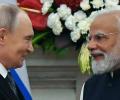
United States representative Sydney Kamlager-Dove while talking about the famous car selfie of Prime Minister Narendra Modi with Russian President Vladimir Putin said that it spoke a thousand words.

Among Sensex firms, Infosys, Bharti Airtel, Adani Ports, Sun Pharma, Tech Mahindra, Eternal, Axis Bank and Maruti were the major laggards. However, ITC, UltraTech Cement, Tata Steel and HDFC Bank were among the gainers.
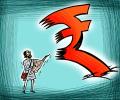
The rupee plunged 26 paise to an all-time low of 90.75 against the US dollar in intra-day trade on Monday, weighed down by uncertainty over an India-US trade deal and persistent foreign fund outflows.

This is the second-worst performance by the pack during this period over the last five years since CY20.

India, the world's fourth largest economy, is set to maintain the 'goldilocks' phase with tailwinds of good growth, low inflation and robust banking performance as well as reform initiatives poised to sustain the economic pace witnessed during 2025.
Among the Sensex constituents, Asian Paints, Tech Mahindra, HCL Technologies, Tata Steel, Maruti Suzuki India, Sun Pharmaceuticals, Tata Consultancy Services, ICICI Bank, Bajaj Finance, UltraTech Cement, Mahindra & Mahindra and Tata Motors Passenger Vehicles were the laggards. However, Eternal, Titan, Adani Ports, Bharat Electronics Ltd, State Bank of India, Bajaj Finserv, NTPC and Bharti Airtel were among the gainers.

'In the long run, India's strong growth story and reforms to make assets globally attractive will determine the rupee's resilience.'

'Amazon, Meta, Google, Microsoft have large operations in India and rely on smooth trade and data flows.' 'Restrictions could raise their costs, limit AI chip exports, and complicate their India strategies.'

'After the Galwan clash, the rules of engagement changed with the army commanders allowed to use any means at their disposal as they deem fit for tactical operations.'

Canadian Prime Minister Mark Carney on Tuesday warned that the world is witnessing a fundamental 'rupture' in the global order rather than a gradual transition, cautioning against weaponising trade, finance, and supply chains.

Equity markets fell on Monday, with benchmark indices recording their worst session in over two months amid caution ahead of the US Federal Reserve's (Fed's) policy announcement and renewed uncertainty over the US-India trade deal. Sustained selling by foreign portfolio investors (FPIs) also weighed on sentiment.
The Union Budget for 2026-27, presented by Finance Minister (FM) Nirmala Sitharaman on Sunday, which was a first, had an excellent domestic macro backdrop. According to the first advance estimates, gross domestic product (GDP) in constant prices is projected to grow 7.4 per cent in the current financial year, against 6.5 per cent in 2024-25.

Among the Sensex constituents, Bharat Electronics Ltd, Eternal, Trent, Tata Steel, Bajaj Finance, Adani Ports, Bajaj Finserv, State Bank of India, PowerGrid, Asian Paints, Tata Motors Passenger Vehicles, Titan, NTPC, Kotak Mahindra Bank, Larsen & Toubro and Bharti Airtel were among the laggards. Tech Mahindra, HCL Technologies, Reliance Industries and HDFC Bank were the only gainers.
 © 2026 Rediff.com - Advertise with us - Disclaimer - Privacy Policy - Sitemap - Feedback - About us - Terms of use - Grievances